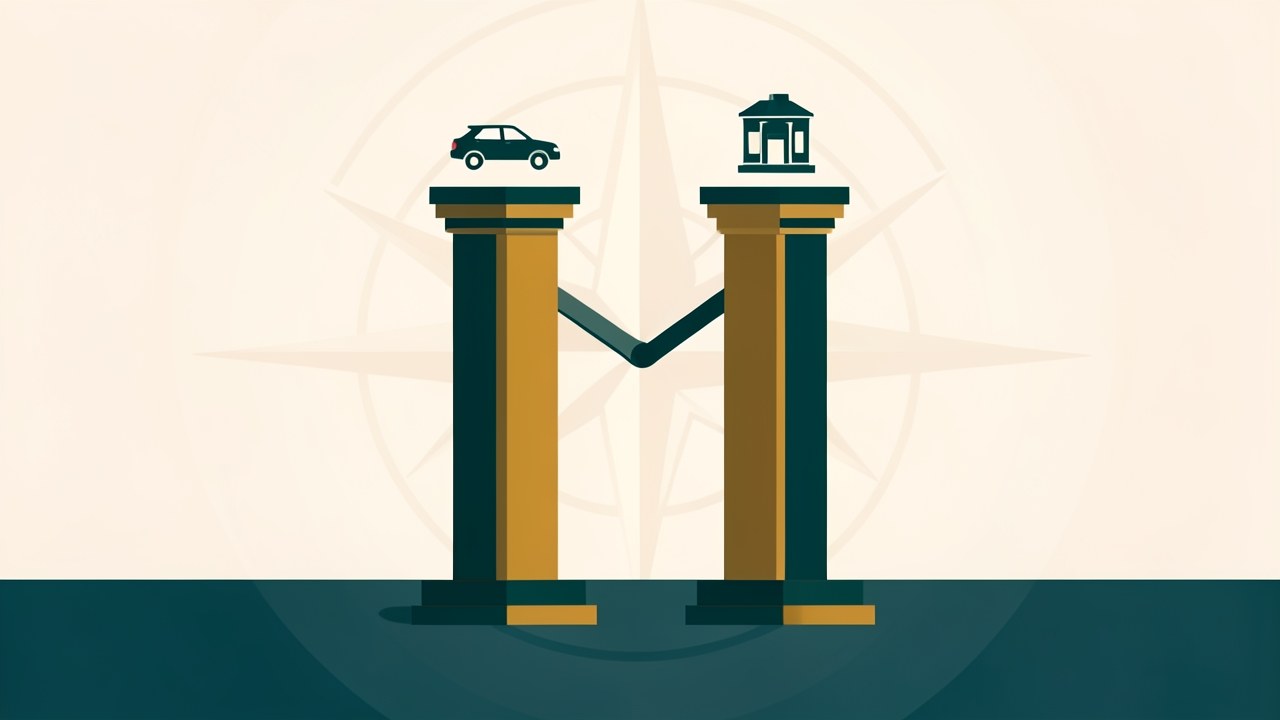
How Dealer Financing and Bank Loans Work
When you finance a car, you have two primary paths: you can arrange financing through the dealership, or you can get a loan directly from a bank, credit union, or other lender. Both methods get you behind the wheel, but they work differently and can have different costs.
With dealer-arranged financing, the dealership typically contacts multiple lenders on your behalf and presents one loan offer to you. The dealer handles the paperwork, and you can often complete the purchase and financing in a single visit. With a bank loan, you apply directly with the financial institution, get approved for a specific amount and rate, and then use those funds to pay for the car—either by bringing a check or arranging a transfer to the dealer.
Your choice between these two routes can affect the interest rate you pay, the fees you incur, and how much leverage you have when negotiating the price of the car.
Sources: Consumer Financial Protection Bureau, Farmers State Bank
Interest Rates: Dealer vs Bank Offers
Interest rates can vary between dealer financing and bank loans, and understanding why is key to making a cost-effective choice.
The rate you receive through a dealer may be higher than the rate the lender originally quoted to the dealer. Dealers often add a markup—sometimes called the difference between the buy rate and the contract rate—to compensate for handling the financing. The Consumer Financial Protection Bureau explains that this markup can result in higher rates through dealers.
On the other hand, when you get a bank loan directly, the rate you are quoted is the rate you pay—there is no hidden dealer markup. This can result in lower overall interest costs, assuming your credit qualifies.
However, dealer financing sometimes includes promotional rates from the automaker's captive finance arm, such as 0% APR for qualified buyers on new models. These special rates are typically not available through direct bank loans, so if you qualify, the dealer route may offer lower interest costs.
Sources: Consumer Financial Protection Bureau, Farmers State Bank, Bank of America
Selected options comparison
The table below compares bank financing and dealer financing across several key attributes based on available evidence.
| Option | Category | Rate Transparency | Convenience | Approval Speed | Negotiating Power |
|---|---|---|---|---|---|
| Bank Financing | Financing Option | Rate offered is the rate you pay, with no markup. | Requires applying before purchase; adds a step but gives more control. | Preapproval typically decided within one business day (FSB example). | Preapproval lets you negotiate vehicle price separately from financing, a stronger position. |
| Dealer Financing | Financing Option | Rate may include dealer markup of 1 to 2 percentage points above the lender's buy rate. | Everything happens at the dealership; you can drive away the same day. | Often same-day approval, allowing a one-stop purchase. | Price and financing are often negotiated together, making it harder to know where you stand on each. |
Sources: Farmers State Bank, Bank of America
Fees and Charges: What to Watch For
Both dealer financing and bank loans may come with fees, though the types and amounts can differ.
Dealer financing may include additional fees beyond the interest rate, such as documentation fees or administrative charges. Bank loans generally have fewer or lower fees, especially if you have an existing relationship with the bank. However, some banks may charge an origination fee or a loan processing fee, so it's wise to ask about any charges upfront.
The exact fee amounts are not standardized, so always review the loan contract carefully. Lenders are required to provide Truth-in-Lending (TILA) disclosures that list all important loan terms before you sign, including the annual percentage rate (APR), which reflects the total cost of credit, including certain fees.
Remember that a lower advertised interest rate might come with higher fees, so compare the APR, which factors in these costs, to get a true picture.
- Ask each lender for a written breakdown of all fees.
- Compare the APR, not just the interest rate, when evaluating loan offers.
Sources: Consumer Financial Protection Bureau, Farmers State Bank
Convenience and Speed of Approval
One of the biggest advantages of dealer financing is convenience. You can choose your car, apply for financing, and drive away the same day—all in one stop. The dealer handles communication with lenders and you don't have to wait for a separate approval from a bank.
Bank financing, on the other hand, requires you to apply with the bank before you go to the dealer. This adds an extra step, but it also gives you more control. Preapproval timing varies; some banks may decide within one business day, but allow time for processing.
If you value speed and simplicity, dealer financing might seem appealing. However, the convenience can come at a cost if the dealer's markup results in a higher rate. Comparing a bank preapproval with a dealer's offer can help you determine whether the convenience is worth the potential extra expense.
Sources: Farmers State Bank
Negotiating Power: Where You Stand
Your negotiating position in a car purchase can change dramatically depending on whether you have bank preapproval or rely on dealer financing.
With bank preapproval, you separate the car price negotiation from the financing negotiation. You know your rate and loan terms in advance, which lets you focus on getting the best price for the vehicle—and you can compare the dealer's financing offer against your baseline, strengthening your bargaining power.
With dealer financing, the price of the car and the terms of the loan are often discussed together. This can make it harder to know whether you're getting a fair deal on each component. The dealer might offer a slightly lower price but compensate with a higher interest rate, or vice versa.
Also, know that you can negotiate the interest rate at the dealership, just like the price of the car. The Consumer Financial Protection Bureau makes clear that the rate is negotiable. If you come with a preapproved bank rate, you can challenge the dealer to match or beat it. If you don't have a preapproved rate, you may be negotiating in the dark.
- Get preapproved with a bank or credit union before visiting the dealer.
- Use your preapproved rate as a benchmark to negotiate the dealer's offered rate.
- Consider separating the price negotiation from the financing negotiation.
Sources: Consumer Financial Protection Bureau, Farmers State Bank
Which Option Fits Your Credit Profile?
Your credit score plays a significant role in which financing route is more accessible.
Traditional banks often require good credit—generally a score of 660 or higher—to approve a loan at a competitive rate. If your credit is strong, a bank loan can offer you attractive, transparent terms.
Dealerships, however, have access to a network of lenders, including subprime lenders, which means they may be able to find you a loan even if your credit is less than perfect. This can be a lifeline if you have limited credit history or have had past financial difficulties.
But be cautious: if a dealer arranges a loan for you from a subprime lender, the interest rate may be significantly higher to compensate for the higher risk. This could make the loan much more expensive over time. Also, if you go to a “buy here, pay here” lot, the dealer is both the seller and the lender, and these loans often come with particularly high rates and strict terms.
Before accepting dealer financing, especially if your credit is challenged, compare the offer with a bank preapproval if possible. Sometimes your local bank or credit union may be more willing to work with you than you expect.
Sources: Farmers State Bank
Decision Framework: How to Choose
Ultimately, the best choice depends on your credit score, your need for convenience, and your willingness to shop around. Here is a practical framework:
First, always get preapproved with a bank or credit union before you shop. This provides a baseline rate and gives you negotiating leverage. Even if you end up using dealer financing, having that preapproval can help you avoid overpaying.
Second, compare the dealer's offer against your preapproved rate. If the dealer can match or beat the bank's rate, and you value the convenience of a one-stop process, dealer financing may be just as good—or better—especially if it includes promotional manufacturer incentives.
Third, consider your credit situation. If you have excellent credit, a bank loan likely gives you the most favorable terms. If your credit is less than perfect, dealer financing may offer more options, but be prepared for potentially higher interest rates.
Finally, read the fine print. Ask about all fees, and make sure you see the TILA disclosure before signing. The Truth-in-Lending Act requires lenders to provide these disclosures, so you can compare offers accurately.
Remember that the Equal Credit Opportunity Act protects you from being denied a loan or offered worse terms based on race, color, religion, sex, or marital status. If you believe you've been discriminated against, you can file a complaint with the Consumer Financial Protection Bureau.
- Get preapproved first, even if you plan to use dealer financing.
- Compare the APR and fees of both offers on a total-cost basis.
- Use your preapproval as a negotiating tool.
- Consider manufacturer promotional rates if you qualify.
- Always review the loan contract for any hidden fees or clauses.
Sources: Consumer Financial Protection Bureau, Farmers State Bank
Frequently asked questions
Can I negotiate the rate at a dealership?
Yes, the interest rate on an auto loan is negotiable, just like the price of the vehicle. The Consumer Financial Protection Bureau confirms that you can discuss the rate with the dealer. Having a preapproved offer from a bank or credit union can give you leverage to ask for a better rate.
Sources: Consumer Financial Protection BureauIs it better to get pre-approved before visiting the dealer?
Yes, getting preapproved is generally advantageous. The CFPB recommends getting financing offers before visiting the dealer to secure the best rates and terms. A preapproval gives you a baseline rate and strengthens your negotiating position, as you can ask the dealer to match or beat it.
Sources: Consumer Financial Protection Bureau, Farmers State BankDo banks offer lower rates for new cars?
Banks may offer competitive rates for new cars, especially for borrowers with excellent credit. However, dealer financing can provide promotional rates, such as 0% APR, that banks typically cannot match. The best rate depends on your credit profile, the lender, and current promotions. Always compare offers from both sources.
Sources: Farmers State Bank, Bank of AmericaWhat is the risk of dealer financing with a buy here pay here lot?
Buy here pay here lots often cater to buyers with poor credit, but they typically charge very high interest rates and may have unfavorable terms. Because the dealer is both the lender and the seller, they may have less incentive to offer competitive rates. It's crucial to read the contract carefully, understand the total cost, and consider whether the loan is truly affordable. If possible, explore other financing options first.
Sources: Farmers State BankSources
- What are the different ways to buy or finance a car or vehicle? — Consumer Financial Protection Bureau
- Can I negotiate a car loan interest rate with the dealer? — Consumer Financial Protection Bureau
- Where can I get information on auto loan rates? — Consumer Financial Protection Bureau
- What is a buy rate for an auto loan? — Consumer Financial Protection Bureau
- Bank vs. Dealership Financing: Which Is Better for Your Car Loan? — Farmers State Bank
- Comparing Bank Car Loans vs Dealer Financing — Bank of America